 Alchemizing Life
My Voice Is My Altar
What a day.
Today's biggest highlight came from a session at the Priestess Summit with one of my favorite virtual mentors—someone I have never met in person, yet whose work has deeply influenced me. I filled pages with notes, but one statement seemed to gather everything else around it:
My lifestyle is my ritual. My body is my altar.
That stopped me.
I have often thought of ritual as something I do: lighting a candle, tending an altar, praying, journaling, cleansing a space, setting an intention. But today I was reminded that a ritual is simply what I am dedicated to. If that is true, then my life is revealing my rituals all the time.
What I repeatedly give my attention to is sacred. What occupies my mind is sacred. The ways I care for—or neglect—myself become ritual. My time is a sacred ritual. Even playing small and hiding can become rituals if those are the behaviors I repeatedly practice.
That realization made me ask a different question: What am I actually devoted to?
I am willing to become my own altar through uninhibited expression and acceptance. I am giving myself consent to tap into my magic, my ancestors, and the ancient wisdom that is a part of me. I am dedicated to receiving me.
And perhaps most importantly, I am giving myself permission to stop outsourcing my power.
When I give my power away—knowingly or unknowingly—it creates anxiety. It can look like people-pleasing, fear, or fear of rejection. It can look like waiting for someone else to validate what I already know, approve who I already am, or grant permission for something that was never theirs to give.
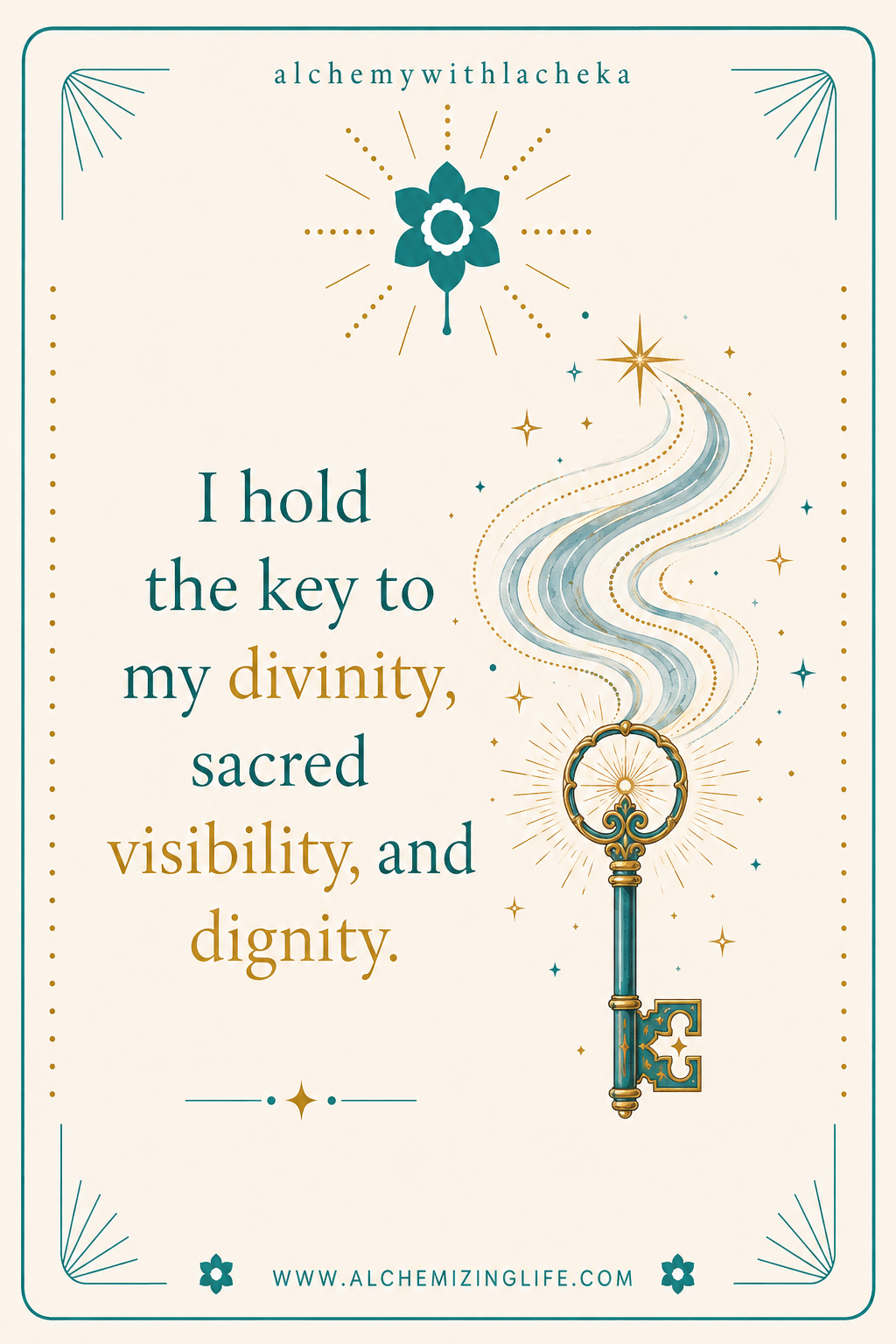
From this day forward, I do not want other people to be the gatekeepers of my divinity, my sacred visibility, or my dignity.
Then came another statement that I had to write down and repeat:
My voice is my altar.
My voice is my altar.
My voice is my altar.
That feels especially significant because an altar is something we tend. We return to it. We honor it. We protect what is sacred there. So what would it mean to treat my voice the same way? To visit it every day? To stop abandoning it for acceptance? To allow it to hold my truth, my wisdom, my questions, my joy, my anger, my desires, and my uninhibited expression?
I also wrote: The standards that I have for my lover, I reciprocate to myself, for myself.
That may be one of the most practical expressions of devotion there is. What if the attention, tenderness, honesty, consistency, patience, pleasure, protection, and care I desire from someone else are also standards for the relationship I maintain with myself?
Even the smallest practices can become reminders. One ritual offered today was to pause before drinking water, blow over it, and speak a love note to yourself before taking a sip. The same intention can accompany washing your hands or taking a shower. Ordinary moments become opportunities to consciously prioritize yourself and your light.
And perhaps difficult moments can become rituals too.
Whenever I feel tested, whenever something is not going “my way,” I can see it as another opportunity to activate my divinity—to practice rather than merely profess who I am becoming.
Maybe sacred living is not something reserved for ceremonies, altars, retreats, or perfectly arranged moments.
Maybe the altar has been here all along.
My body. My time. My attention. My choices. My voice.
And now the question is whether I will tend them as though they are sacred.
Alchemy Reflection: If your repeated choices reveal what you are devoted to, what do your current rituals say is sacred to you—and what would you consciously choose to make sacred now?
Mantra: My lifestyle is my ritual. My body is my altar. My voice is my altar. I do not outsource my power. I am dedicated to receiving me.
Ase. Aho. Amen.